Bringing truth about residential schools and Indigenous hardships to light is the greatest path forward to reconciliation.
That was the continuing message on the National Day of Truth and Reconciliation on Wednesday on the Tyendinaga Mohawk Territory
A sea of orange took part in the sixth annual Every Child Matters Walk from the Mohawks of the Bay of Quinte Administration Building to the Karonhiaktakie Sports Complex.
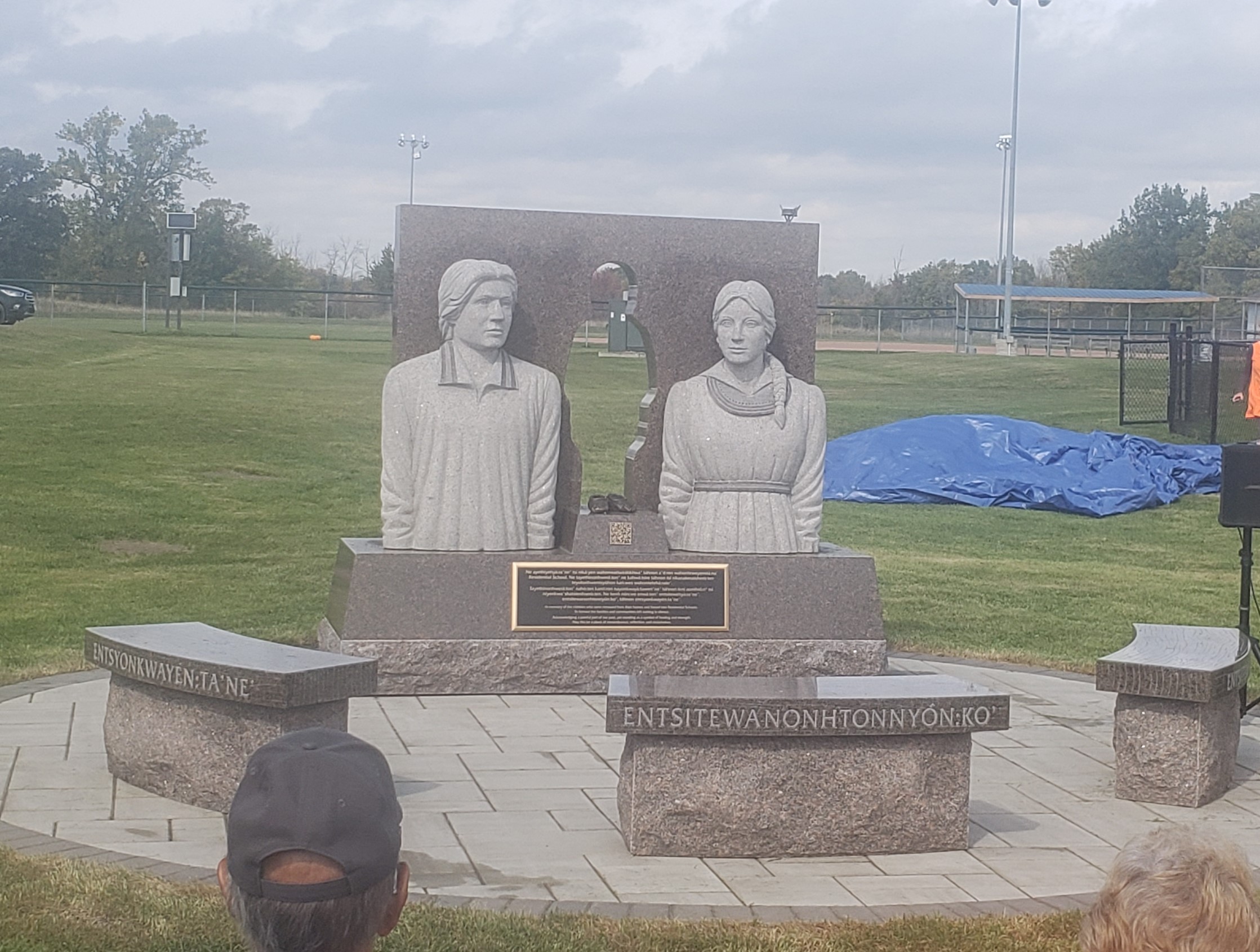
There, the gathering of about 200 people got the opportunity to see the unveiling of a monument, bringing back to life the names and stories of those who were affected by the residential school system.
This monument, Mohawk leaders say, is meant to start a conversation and recognize the past, while creating an educated and proud future for Indigenous peoples.
The monument was designed by Campbell Monuments in Belleville with input from Mohawk leaders, with talks on this project beginning in 2024.
Chief R. Donald Maracle was one of the speakers at the ceremony, calling up several residents who had relatives that went through the residential school system.
He touched on the difficulties faced by a society trying to get young Indigenous kids to conform.
“The goal was to assimilate First Nations people into the body politics, so they would be just like British people,” the Chief noted.
“They would no longer speak their language. They would not know their history. They would be separated from their families and the influence of their family, their culture, and their identity would take on a new version of a new British subject.”
Talking to a residential school survivor, the Chief said it was learned that staff at the school would inflict severe punishment on children that attempted to run away and escape.
“They would have to scrub floors for months on their hands and knee cement floors. They were mistreated,” Chief Maracle said.
“Running away was seen to be that they were not well-behaved children, and all they were was lonesome for their family and their community.”
One of the last remaining residential school survivors still living on the Mohawk Territory, Wilbert Maracle, was on hand for the monument unveiling.
He spoke about his childhood experiences of he and his brothers being taken away from his mother and being abused while having little to eat and overcoming those struggles to become a thriving member of the community.
Unmarked graves have sporadically been discovered since the 2020 revealing of 215 graves on a Kamloops, BC First Nations reserve.
For those interested in learning more about the history of residential schools, the monument features a QR code containing a link to a website page that provides educational resources and a glimpse into the past.
The walk was organized by the Tyendinaga Native Women’s Association.
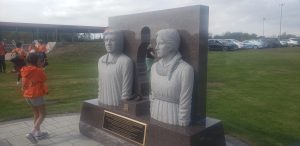
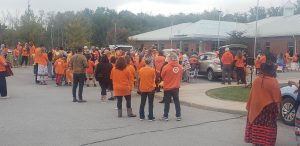
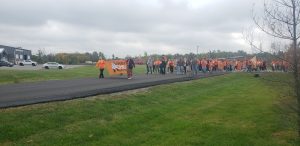
Photo: Inquinte.ca