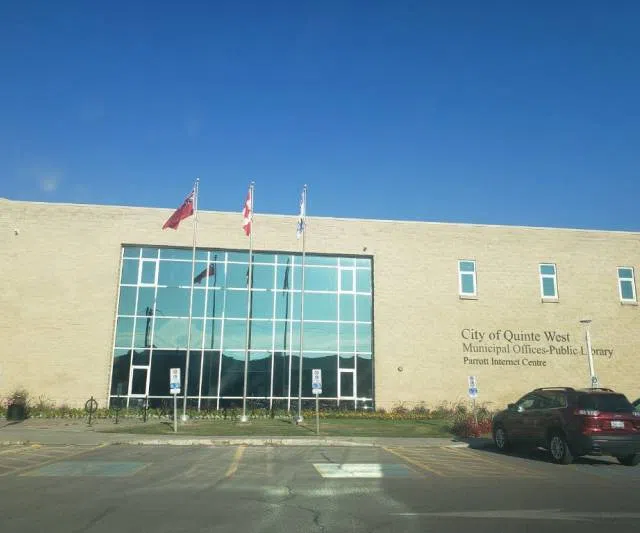
Quinte West City Council has agreed to maintain its current billing practices for non-sewage water consumption following a decision made at Wednesday’s meeting.
Under the existing system, residents are charged wastewater rates based on water metre readings (per cubic metre), with the assumption that all metered water flows back into the sanitary sewer system.
Some residents had raised concerns that this method overestimates actual wastewater usage.
In response, Council had directed city staff to explore the feasibility and practicality of alternative billing methods to address the issue.
Staff evaluated four key factors when considering potential alternatives – feasibility, viability, equity, and efficiency.
The staff recommendation was that while there is resident concern about fairness in wastewater billing, research and municipal comparators indicate that residential wastewater charges across Ontario are uniformly tied to metred water use. Installing sewer metres or allowing self-reporting is neither feasible nor financially viable.
The staff report mentioned that all alternatives that reduce volumetric wastewater billing would require offsetting increases in consumption/base charges to maintain the self-sufficiency of wastewater systems in affected areas, administrative complexity and cost recovery make widespread exemptions financially unsustainable, and comparator research shows status quo is the prevailing model across Ontario municipalities.
Council meets again on Nov 19 for 4:30pm.
(HAILEY MACDONALD)


