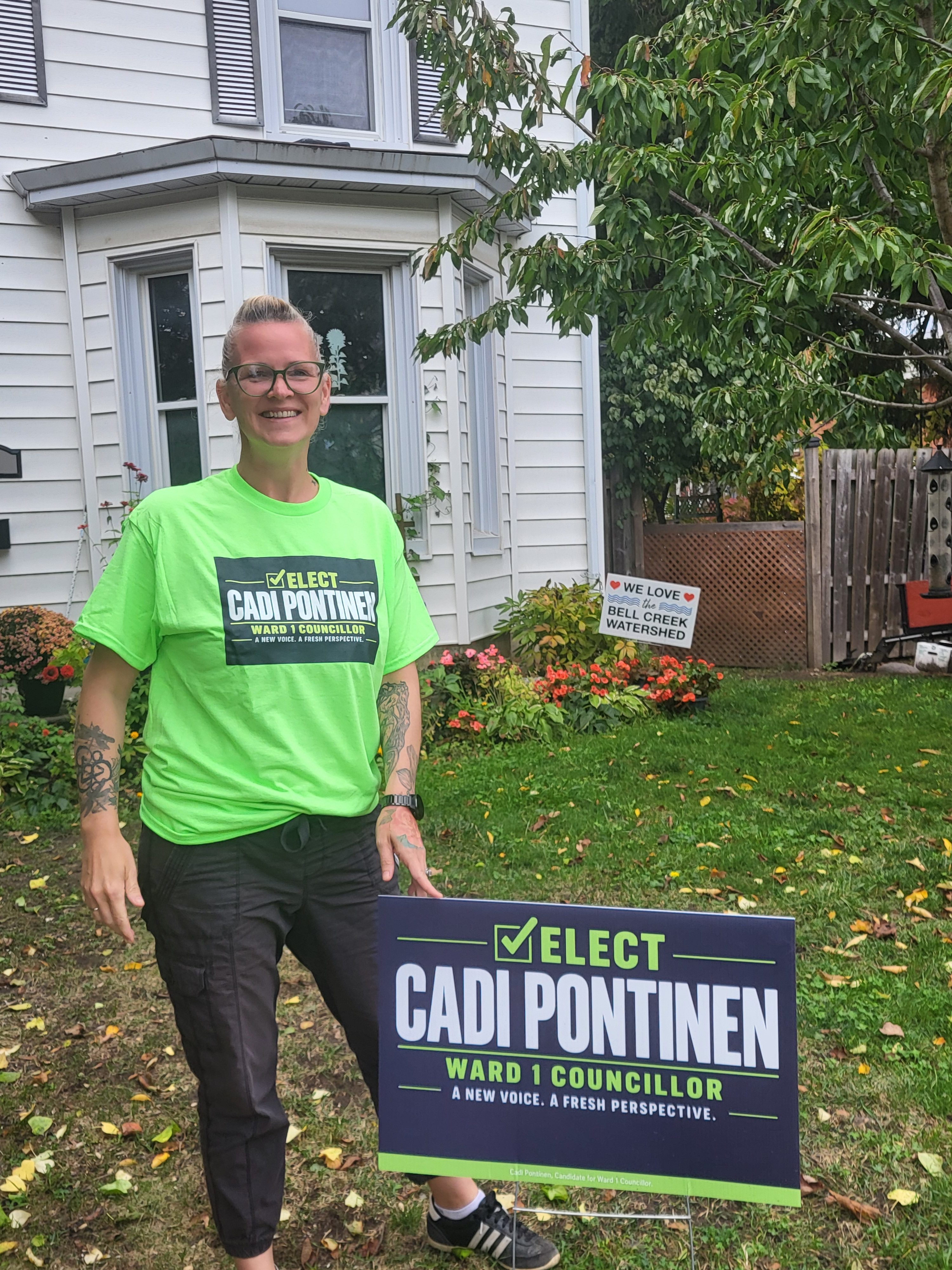
Photo: Cadi Pontinen/Submitted.
In an effort to promote discussion on key issues during the current election period, we are giving candidates the opportunity to answer a number of questions that may be of interest to local voters.
Everyone receives the same questions, and their answers are presented with minimal editing for format purposes only.
Here is the candidate profile for Belleville Council Ward One candidate, Cadi Pontinen
Election day is October 26.
First and Last Name
Cadi Pontinen
What position are you seeking in the upcoming municipal election on October 26?
Belleville City Councillor Ward 1
Question 1 – Why are you running and what are your main priorities if elected/re-elected?
I’m running because Belleville has so much potential, and I don’t believe we’re making the most of it. Residents are dealing with deteriorating roads, rising taxes, aging infrastructure, accessibility barriers, concerns about public safety and development decisions that leave neighbourhoods feeling unheard. My priorities are responsible spending, infrastructure, accessible and attainable housing, community safety and transparency. I also want to see us make better use of our waterfront, revitalize downtown and protect our green spaces. As a parent of children with disabilities, accessibility is personal to me. It needs to be considered in everything from sidewalks and transit to housing, recreation and public spaces, not added as an afterthought. Belleville is a small city with a big footprint. We have tremendous opportunities, but we need to start planning for the needs of everyone who calls this city home.
Question 2 – How do you balance budgetary restraint with continuing increases in many areas of the municipal budget?
Belleville’s 2026 tax levy increased by 6.89%, while residents continue to raise concerns about deteriorating roads, infrastructure and essential services. We need to question spending, review priorities and measure results. Every department should be accountable for how public money is spent. We also need to stop changing project priorities and allowing delays and repeated work to drive up costs. I bring 25 years of sales leadership experience, managing budgets, negotiating contracts, leading teams and delivering results. I understand the importance of making difficult financial decisions while recognizing that some investments prevent much larger costs down the road. Accessibility is a perfect example. Designing a project to be accessible from the beginning is generally more practical and cost-effective than retrofitting it later. Good financial planning means thinking beyond the initial price tag.
Question 3 – Infrastructure projects are a huge strain on local budgets, especially when it comes to water/wastewater. How can we address/reduce these costs moving forward and mitigate the impact for ratepayers/taxpayers?
We’re seeing significant water and wastewater infrastructure issues across Belleville, and I’m living through the construction nightmare in Old East Hill as we speak. The Bridge Street East reconstruction is a perfect example. Aging watermains, repeated breaks and deteriorating sewer infrastructure have made major replacement work necessary. These are investments we cannot avoid, but they demonstrate why preventative maintenance and long-term planning are so important. I understand firsthand the disruption these projects create for residents. We need better communication, realistic timelines, stronger oversight of contractors and accountability for project costs. We also need to coordinate roadwork with underground infrastructure improvements, pursue provincial and federal funding, and ensure new developments don’t place additional strain on systems that are already struggling. Accessibility must be considered from the beginning, including safe pedestrian routes, sidewalks and property access during construction. We cannot continue putting off necessary maintenance until it becomes a much larger and more expensive problem. Ratepayers deserve infrastructure that works, projects that are properly managed and a clear understanding of where their money is going.
Question 4 – What measures can the municipality take to address the issues of affordability and housing security?
Affordability is something I understand personally. I’m a renter too, and despite working hard and having a good career, saving for homeownership has become nearly impossible. If families with steady incomes are struggling to get ahead, we need to recognize just how serious this issue has become. Belleville needs more housing options, but we also need to be smarter about where and how we build. We have a large footprint with opportunities for responsible development, including affordable rentals, cooperative housing, smaller starter homes, accessible housing and attainable homeownership. Not everyone wants to live downtown, and not everyone wants to live rurally. We should be offering choices that make sense for different stages of life. We also need to look at underused properties, existing infrastructure capacity and development costs without sacrificing established neighbourhoods and green spaces. Accessibility needs to be built into housing plans from the beginning, particularly for seniors and people with disabilities. And affordability doesn’t stop at housing. Property taxes, utilities, transit and municipal fees all affect what families have left at the end of the month.
Question 5 – Homelessness has become a major issue for most local communities. What would you do to address this issue and what needs to happen to have a meaningful impact?
This is where I draw a line in the sand. I live near The Bridge Hub and the former services at Bridge Street United Church. I’ve seen firsthand what our neighbourhoods, businesses and vulnerable residents are experiencing. We cannot solve homelessness overnight, and we certainly cannot solve every situation the same way. But continuing to throw money at the problem without demanding measurable results isn’t working. Moving people from one location to another isn’t a solution either. We need to separate homelessness caused by financial hardship from situations involving serious addiction, mental health challenges and criminal activity. Each requires a different response. It’s time to take a stronger stand on addiction and public safety. Open consumption of illegal drugs in public spaces is prohibited under Ontario law, and those laws need to be enforced. I support real consequences for illegal activity, alongside meaningful opportunities for treatment and rehabilitation. Where legally appropriate, our justice system should prioritize treatment and recovery options while holding individuals accountable. At the same time, we need to focus resources on helping people who can transition into stable housing, employment and independent living, while ensuring those with more complex needs receive appropriate care. I want to see clear reporting on what our programs cost, how many people are accessing treatment, how many are successfully housed and whether we’re actually reducing homelessness. Compassion does not mean accepting lawlessness, and accountability does not mean abandoning people who need help. We need both. Enough of managing the problem. It’s time to start measuring whether we’re solving it.
Question 6 – What message do you want the voter to know about you and your campaign and your priorities for the next four years?
I’m a mother of five, a community volunteer and a business leader with 25 years of experience across sales leadership, operations, procurement and international business. I’ve held positions including Director of Operations, Director of International Sales and leadership roles overseeing multimillion-dollar businesses and accounts exceeding $20 million. I’m accustomed to managing budgets, negotiating contracts, making difficult decisions and being held accountable for the results. I understand how to balance competing priorities, consider the impact on everyone involved and keep the wheels on the bus. Scrutiny doesn’t intimidate me. It’s part of being responsible for the decisions you make. But I also bring real-life experience. I’m a renter, a parent of children with disabilities and someone who understands the financial pressures families face. I know what it’s like to work hard and still struggle to get ahead. I’m not running with a personal agenda. I’m running because I believe Belleville needs stronger accountability, better planning and leadership that puts residents ahead of personal preferences. I will do my homework, ask difficult questions and challenge decisions that don’t make sense. I won’t always agree with everyone, but I will listen, explain my reasoning and stand behind my decisions. Over the next four years, I want to see responsible spending, meaningful infrastructure improvements, better accessibility, safer neighbourhoods and a city that makes the most of the opportunities we have. Belleville doesn’t need more promises. It needs people willing to do the work, make informed decisions and be accountable for the results.