Photo: Submitted
Story submitted by Campbellford Memorial Hospital
At Campbellford Memorial Hospital, recovery doesn’t always look like traditional therapy.
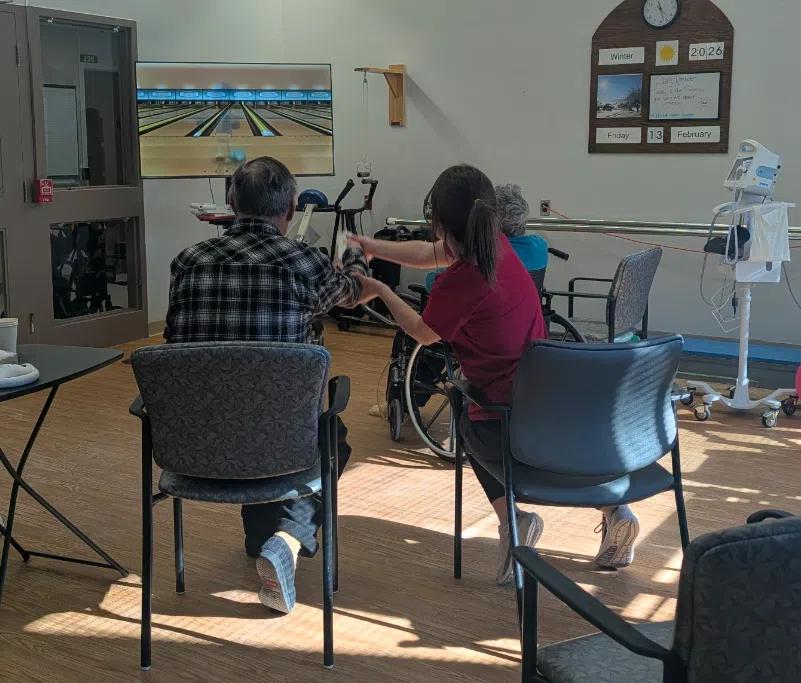
Sometimes, it looks like a digital bowling match, a virtual tennis rally, or colourful interactive light games projected onto a table. Through innovative therapeutic technology and recreation-based programming, CMH’s Restorative Care team is helping patients regain mobility, strength, and cognitive function, all through the power of play.
In the hospital’s Restorative Care Program, tools like the Nintendo Wii and the Tovertafel interactive gaming system are transforming the recovery experience at CMH. Patients participate in activities such as virtual bowling and tennis to improve balance, coordination, range of motion, and endurance, often without even realizing how much therapeutic work they’re doing.
The Tovertafel, an interactive light projection system designed specifically for older adults and individuals with cognitive challenges, brings dynamic, responsive games directly to a table surface. Patients reach, swipe, and interact with projected images that respond instantly to touch and movement, encouraging both physical activity and cognitive engagement.
“These tools allow us to meet patients where they’re at,” says Caitlyn Payne, Recreation Therapist at Campbellford Memorial Hospital. “When therapy feels like play, people are more engaged. They’re motivated to participate, and that’s when we see real progress.”
Payne explains that recreation therapy is designed not only to support physical improvement, but also to foster confidence, connection, and joy. “The goal isn’t just mobility,” she adds. “It’s about dignity and helping people reconnect with abilities they may feel they’ve lost. When someone lights up after knocking down a virtual set of bowling pins, that moment matters.”
The CMH Restorative Care team supports acute care patients who benefit from focused therapy to build strength, independence, and confidence before safely returning home.
By incorporating interactive technologies and meaningful recreational programming, CMH helps patients recover more effectively, supporting smoother transitions and, shorter hospital stays. “At CMH, we believe recovery should be engaging,” says Payne. “If we can combine clinical goals with moments of laughter and connection, that’s a win for everyone.”
Screenshot