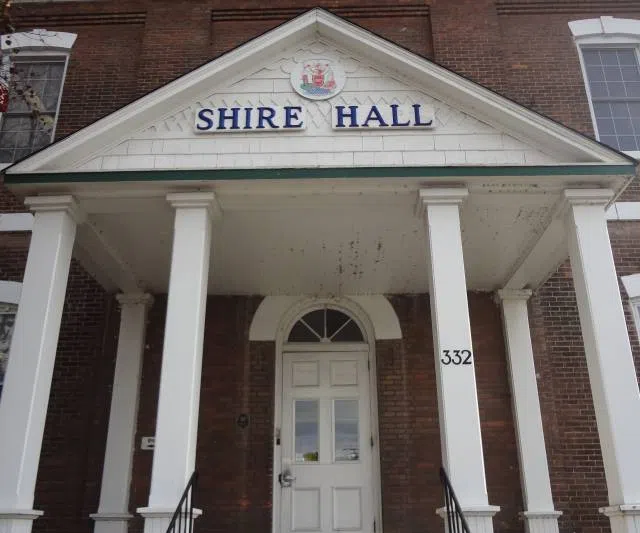
Prince Edward County Council have concluded their 2026 budget meetings this afternoon.
The levy over levy increase is 5.32% and the net levy or levy after considering 1.73% in assessment growth is 3.59%. The original proposed tax levy increase by staff was 11% before discussions over the last three and a half days.
A $267,000 home translates to an extra $100.78 increase over the year. The taxes on $100,000 would be a yearly increase of $37.74. Taxes on $300,000 would be an increase of $113.23. Taxes on $600,000 would be an additional $226.47.
Council began today’s meeting with talks of Community Services, Programs, & Initiatives.
COMMUNITY SERVICES, PROGRAMS & INITIATIVES
What the department does
-
Oversees Economic Development, Corporate Communications & Customer Service, and Community Programs.
-
Focuses on poverty reduction, economic growth, transit service, healthcare partnerships, property sales, and public engagement.
-
Provides resident-focused programs and services grounded in accessibility, inclusion, and community well-being.
2025 Performance
-
Secured $572,432 in grant funding, including major infrastructure grants.
-
Handled 8,813 phone calls, 1,138 emails, 1,235 in-person visits, and 453 form submissions.
-
Managed 75 media requests and supported 158,625 website visits.
-
Delivered 25+ public engagements, consulting roughly 500 participants.
-
Completed 115 BR&E survey responses from local professional services.
-
Transit saw a 54% ridership increase in early 2025, with 911 rides on the Summer Weekend Connector.
-
Sold 3 industrial park lots (3.28 acres) for $478,000 + HST.
-
Delivered the Municipal Financial Relief Grant and other community supports to 433 residential property owners, 33 land-lease owners, and 38 utility account holders.
2026 Key Goals
-
Update the Community Safety & Well-Being Plan, reflecting emerging needs and partner capacity.
-
Develop a communications framework for major projects and infrastructure initiatives.
-
Create a Community Improvement Plan to drive business growth and downtown revitalization.
-
Build a four-season visitor economy strategy to support stable, year-round employment.
-
Continue delivering child-care initiatives, youth engagement, and coordinated community planning.
Service Forecast & Efficiencies
-
Continue implementing:
-
Child Care Action Plan
-
Youth Engagement Strategy
-
Online Community Calendar
-
-
Shift unspent funds toward strategic priorities such as child care, food security, and rural poverty—avoiding new budget asks (saves $50,000).
-
Transit “refresh” staged to maximize existing funds, with some wage costs covered by grants.
Operating Budget Notes
Community Grants include major annual supports:
-
$473k — Municipal Financial Relief Grant
-
$30k — Canada Day
-
$78,793 — Recreation Committee per capita funds
-
$30k — Agricultural Grants
-
$100,000 — Heritage Grants
-
$169,058 — General Community Grants (cash & in-kind)
-
$50,000 — PEC Arts Fund (MAT-funded)
-
Exceptional partnerships, including:
-
Community Care for Seniors ($27,390, rising to $64,890 with motions)
-
PEFAC ($70,000, rising to $170,000 with motions)
-
Learning Centre ($80,000)
-
The ROC Youth Centre ($90,000)
-
Other 2026 budget additions:
-
$50,000 — Child care supports
-
$50,000 — Chamber of Commerce agreement
-
$10,000 — Communications for major infrastructure
-
$100,000 — Community Improvement Plan (50% ROD funding sought)
-
$3,000 — Summer contingency fund (MAT-funded)
-
$10,000 — Youth Engagement Strategy
-
$5,000 — Krasyliv Friendship City partnership
Revenue outlook:
-
Property sales expected to increase due to ongoing industrial park transactions and surplus properties moving to market.
-
Community Safety & Well-Being (CSWB) now has its own standalone budget (previously within OPP budget).
Several motions were put on the floor during the discussion, which resulted in the following:
That Council recommend that if $150,000 be allocated to PEFAC in the draft 2026 budget, that $80,000 of that allocation be funded through reductions in the 2026 operating budget. This carried.
That Council recommend that $80,000 be transferred from the Community Improvement Plan Reserve to offset the $80,000 increase to the PEFAC allocation in the draft 2026 budget. This carried.
Councillor St-Jean brought forward an additional motion that staff be directed to review the advertising costs incurred across the organization and report back on potential cost-savings for Council consideration. This failed in a tie vote – Councillor Engelsdorfer did not vote on the motion due to a conflict. St-Jean’s reasoning behind the motion was that he felt too much money was being put on tax-payers for the exact same advertising of Council meetings across three local newspapers and that it should only be in one.
Some members of Council spoke against the motion, saying not all residents receive all three newspapers, and some residents have said they are not well-informed about Council activities. Additionally, given that Prince Edward County has a high senior population, that is how many residents receive their news and many do not use social media or online websites to obtain information.
Council also heard from Housing Services and the CAO’s office.
HOUSING SERVICES
What the department does
-
Leads work on the County’s Housing Plan and supports the Affordable Housing Corporation.
-
Facilitates construction of 390 purpose-built affordable units across five sites.
-
Supports the Queen Elizabeth School redevelopment and community housing projects.
-
Provides housing and homelessness supports, housing stabilization programs, and maintains local housing data.
2025 performance
-
Helped 85 tenants/property owners find housing.
-
Relocated 12 formerly homeless residents into transitional housing (Leeward House).
-
4 secondary suite applications, hitting 88% of funding drawdown.
-
605 rentals listed on the county registry — about 70% of the rental market.
-
3 agreements secured for 62 new affordable rental units.
-
Distributed 197 transit tickets/passes to support housing access.
2026 goals
-
Advance non-profit and private-sector affordable housing builds.
-
Move forward the QE School affordable housing + community hub project.
-
Continue governance and operational support for the Affordable Housing Corporation.
-
Centralize and apply housing data across departments.
-
Strengthen evidence-based housing policy at the regional/provincial level.
-
Enhance supports for residents experiencing homelessness and housing instability.
Operating budget notes
-
The Affordable Housing Reserve is depleted, so department costs now rely more heavily on the tax levy.
-
Provincial funding (through PELASS) continues to fully support:
-
Leeward Transitional Housing staffing and operations
-
Housing Help program
-
-
The County will seek additional PELASS funding for Leeward House.
-
Ongoing growth in accommodation tax revenue contributes to housing initiatives.
This was carried by Council.
CAO’S OFFICE & MAYOR’S OFFICE
What the offices do
-
Ensure municipal operations align with strategic goals and community needs.
-
Lead modernization, corporate culture, risk management, and cross-department collaboration.
-
Advocate for intergovernmental support and regional partnerships.
-
Mayor’s Office handles public engagement, Council leadership, and community representation.
2025 performance
-
Mayor attended 22 EOWC meetings as Vice Chair and 5 conferences.
-
Took part in 3 provincial delegations (Health, Transportation, MAH).
-
35 public appearances, 58 proclamations, and 4 civic recognition certificates issued.
2026 goals
-
Continue advocacy for major capital projects:
-
Infrastructure funding
-
Physician recruitment
-
Licensed child-care spaces
-
Affordable housing
-
-
Support the 2026 municipal election and post-election orientation.
-
Conduct a Service Delivery and Organizational Review.
-
Ensure staffing and resources align with community expectations.
Operating budget notes
-
Includes $10,000 for the new Civic Recognition Awards Program.
-
$100,000 for the Service Delivery & Organizational Review.
-
$25,000 for Non-Union Compensation By-law review.
-
$25,000 for an Equity Audit.
-
Reduced costs due to lower membership fees with the EOWC.
This was received by Council.
The 2026 Operating Budget slides can be viewed here.


